By: Marie Pascual
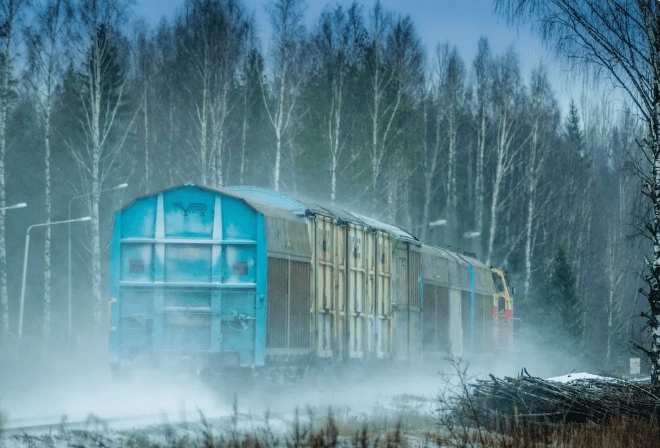
The platform was empty except for the man in the hat. He did not speak. He only pointed.
The carriage rattled on steel, smelled of old smoke and something sweet, like rice left too long on the stove. I sat where the ticket told me,Seat 9A, window on the left. He handed me a folded slip. Three rules, printed like a warning label:
1. You may only watch through the window at your seat.
The train selects your memory. You do not.
(Face forward. Eyes on the glass.)
2. You must exit before the train stops.
If you do not disembark, your name will not be remembered.
(There are no return trips.)
3. Do not open the window.
No matter what you see. No matter who calls to you.
(Memory always lies)
I read them once. They did not make sense.
I read them again. They did.
The window showed her at seventeen.
Hair in a thick braid, leather book bag pressed to her chest. She stepped off a dirt road and smiled at someone I could not see. Her blouse was sun-worn, her shoes cracked leather, but her shoulders were still light.
Before Denmark. Before the drunkard. Before she sent me away.
This wasn’t the woman I remembered. The one who yelled and cracked jokes too loud at dinner just to keep herself from crying. This was someone else entirely.
I pressed my palm to the glass. She did not see me.
The train kept moving.
The window dimmed. Smoke unfurled.
A nursing home hallway flickered into view: pale green floors, crucifixes over every door. A younger Nanay walked briskly, name tag crooked on her scrubs. Thinner. Hair tied tight. Mouth set like a locked drawer.
At the end of the hall, a nun pointed.
“We cannot have unmarried mothers on staff.”
Nanay nodded once. Said nothing.
I watched her get fired. No warning. No explanation. She stood outside in the cold afterward, one hand on her belly, the other counting something on her fingers.
Rent. Diapers. Food.
I wanted to scream at the nun, at the cold, at the unfairness of it all.
But Nanay folded her coat around her belly and walked away. She did not look back.
I think she’d learned, by then, that looking back never saved anyone.
The train lurched. The smoke shifted.
_____
Now: a stairwell. Nanay bent over laundry, pressing a letter to her chest. Danish postmark. She read it with her whole body, like it was a voice she missed more than sleep.
Not a bill. Not a form.
Something she read slowly, lips moving, thumb tracing the edge like it might tear.
Maybe it said ‘Fresh start in Canada’
Maybe it said We miss you.
Maybe it said nothing at all.
I used to think she never stopped moving because she was strong.
But watching her there, maybe she was just trying to outrun something that kept catching up.
Hospital shifts. Slot machines. Cash jobs. Convent lunchroom.
She worked sixteen hours, napped in her coat, then started again. Handed leftover food to strangers. Disappeared into the casino’s glow like ritual.
“Maybe this time,” she prayed, clutching her monthly savings like a cross.
Generous to everyone. Stingy with sleep.
Always betting, even when she could not afford to lose.
Another shift.
———
Illocos, 1970s. My mother, younger than I’d ever imagined, dancing barefoot in the rain. A boy played guitar under a mango tree, and she laughed like a girl who believed the world would soften for her.
My hand moved toward the window latch.
Stopped.
She was happy.
Then suddenly: my own face reflected in the glass.
Not as I am now, but as I was the day I left. Younger, angrier. Hair hacked short with kitchen scissors. Eyes bloodshot. Backpack stuffed with lies, too small to carry what I was leaving behind.
Behind my reflection, Nanay was screaming.
Not at me.
She tore open my closet. Took down the baby clothes I’d left behind. Folded. Unfolded. Folded again.
Her hands shaking the whole time.
“Why didn’t you show me this?” I whispered.
But the train did not answer.
And the window stayed shut.
The lights flickered. A soft whine hummed beneath the floor.
Last stop approaching.
I reached for the rules. Crumpled now, ink bled where my palm had sweated through the page.
I stood. My legs felt too long, like I was wearing someone else’s bones.
Then I saw it.
The memory I’d buried deepest.
Me at twenty-two. Holding my son for the first time. Crying and laughing and blinking at the ceiling like it was a sky I did not believe in.
And there, behind me:
Nanay in the hallway. Watching through the hospital glass, hands pressed flat, shaking her head like she could not bear to come in.
Like she wanted to, but didn’t know how.
Like maybe she was afraid I would not want her there.
The version of her I never let myself remember.
I stayed standing. Half in the aisle, half outside myself.
I can still make it off this train.
What if she looks at me again?
What if she doesn’t?
My hand hovered near the latch.
Rule Three: Memory always lies
I took one step closer.
She looked up.
Not at the baby.
At me.
Straight through the window, straight through time, eyes locking like she’d known all along I’d come back to this moment.
Like she’d been waiting.
The train stopped.
Doors hissed open. Passengers shuffled out with bowed heads and fast feet.
No one spoke.
The conductor tipped his hat.
I did not move.
Outside, the station blurred into fog. My name tugged at the back of my throat, but I no longer remembered how it began.
The glass went black.
Behind me: footsteps. Another passenger. A fresh ticket sliding into place.
Their time read 9:14.
Same seat, same window. Same choice I could no longer make.
And I did not rise.
 Marie Pascual - Between Worlds
Leave a comment