What Vietnam taught me about eating alive, and why Canada’s local food movement still leaves immigrant kitchens behind.
It’s been two months since coming back from Vietnam, and the Canadian winter has already started to wear on me. Since landing, I’ve been sick for almost two and a half months with no real sign of relief. The longer I stay indoors, cycling through fast food and frozen produce, the more I find myself questioning whether eating local, or practicing anything close to agrarianism, is even possible in the West anymore.
Before traveling to Mexico and Vietnam this year, I kept circling the same question: is eating local worth sacrificing diversity?
I still don’t have an answer.
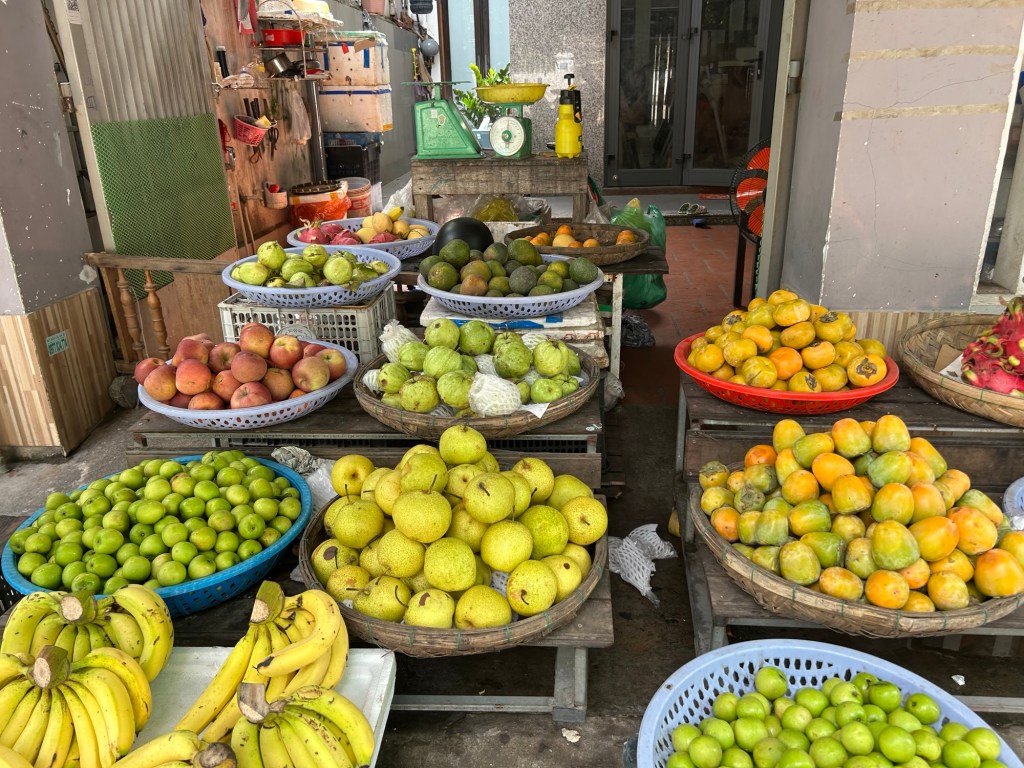
In Southeast Asia, or really anywhere with a warmer climate, accessibility feels built in. Fresh citrus, herbs, vegetables, and fruit aren’t ideals. They’re just there. But when you come from an immigrant background like mine, that model collapses quickly back home. Half the foods you grew up eating disappear the moment you commit too rigidly to “local.” No lemons or limes. No moringa leaves. No bagoong. No calamansi.
At some point, the question stopped being about sustainability and started feeling more personal: is eating local, as it’s currently framed, a form of cultural erasure? Is it quietly exclusionary by design?
I didn’t want to land on that conclusion without challenging it. So I tried to prove myself wrong. I started looking for farms in Ontario run by immigrants, for immigrants. Places where freshness and cultural memory might still coexist.
Farms, Memory, and Local Food That Felt Like Home
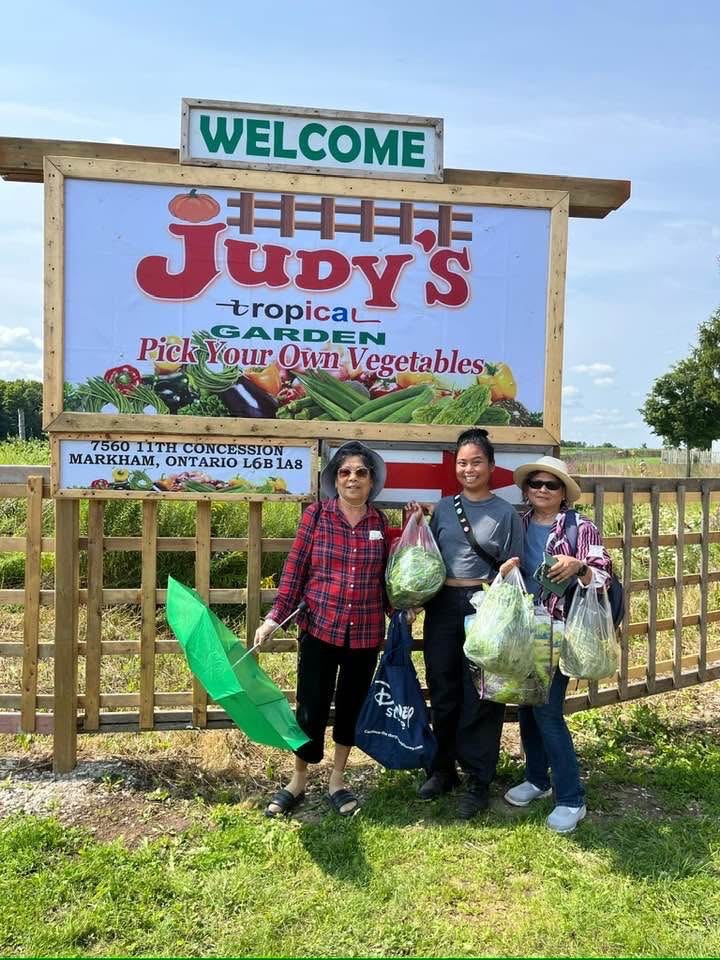
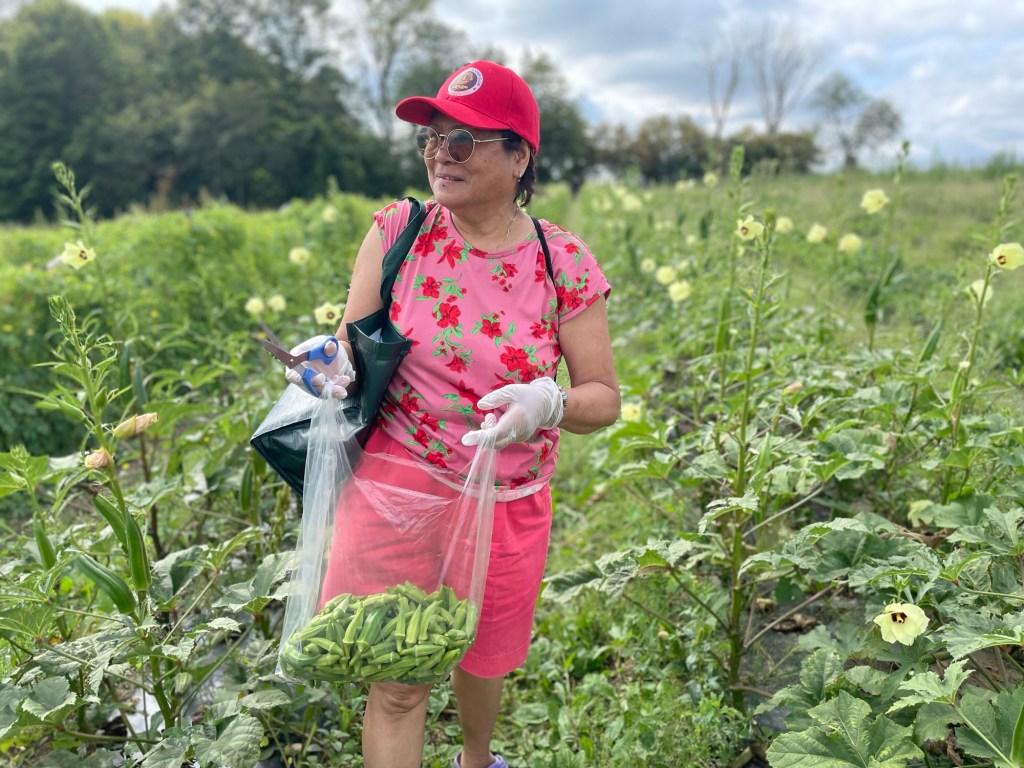
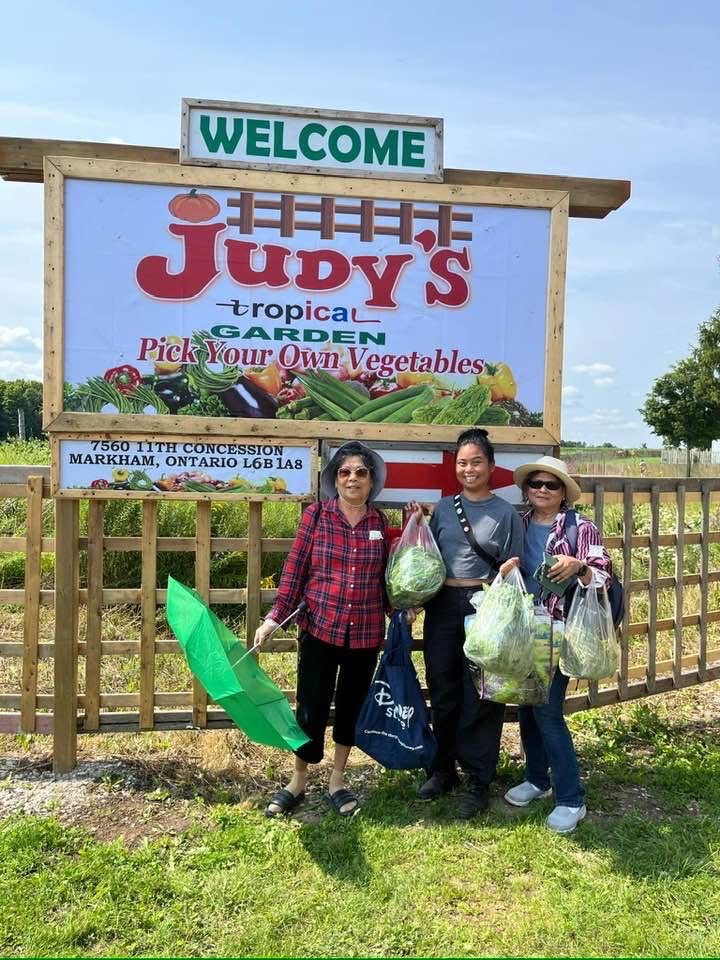
Growing up, my mom would take my siblings and me to Whittamore’s Farm. A place that, to me back then, was local eating. Whittamore’s sat at Steeles Avenue East and Beare Rd. I remember the way the fields stretched wide, the rows of green and the weight of summer in every plant. We’d pick out eggplants, okra, peppers, and corn, the three of us lugging the harvest back to the car. It was run by a Filipino family, so somewhere between the rows of produce and my mom’s steady picking was the closest thing I knew to local food that felt like home.
We also used to wander to the farmers’ market by Gerrard Square every weekend. Mom in charge of buying “fresh fish,” me mostly fascinated by how alive the produce still felt. That cheap, vibrant sense of real food wasn’t exotic then; it was just what we ate.
Whittamore’s closed down during the pandemic era, and it left a gap I didn’t quite articulate until now. In trying to recreate that sense of home, I started hunting for farms in Ontario that are run by immigrants, for communities like mine: Carabao Fields (Filipino), Shade of Miti (South Asian), Lawoti Farms (Nepali), Xa Lát Farm, Red Pocket Farm. But none of them are even within the half-hour drive Whittamore’s used to be. None of them were where mom and I strolled every Saturday. I need to double-check those distances, but the distance isn’t just physical. It’s a reality of access.
Today, we still have Evergreen Brick Works, which is lovely, but not exactly a wholesale source for the ingredients my mom used to buy. It feels gentrified in its own way. A curated vision of “local food,” rather than the practical one she depended on. Downsview Market is one of the only places that still feels like a true farmers’ market, but it sometimes feels like an island in a city that otherwise runs on freezers and big-box supply chains.
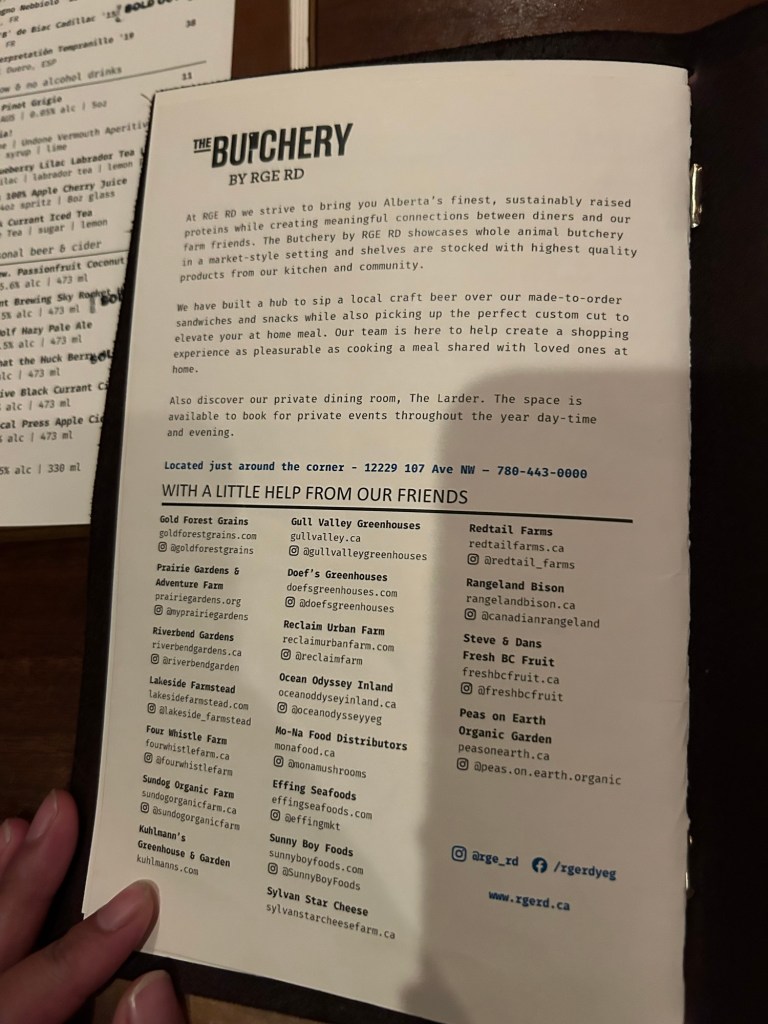
And yet, when I think about restaurants like Pearl Morissette in Niagara or RGE RD in Calgary, places that practice farm-to-table with a kind of regional pride, what strikes me isn’t how they replicate my mom’s eggplants or the stalls of Gerrard Square. Their menus still speak to a Canadian/Western palate. They are fine expressions of place, but they’re not expressions of every place in this country. Not the places that feed immigrant families, not the places where food is memory and identity as much as it is nourishment.
In Toronto, a city that is gloriously diverse, how would an immigrant experience this same freshness? Is there space in agrarianism for the foods that are tied to our stories, not just our soil?
When I worked at Vit Beo, we lived this question in every bowl of broth and every plate of salad. The pho stock was made one to two days before selling. Not out of trendiness, but because freshness made it taste right. We picked basil and made smashed cucumber salad on the same day, because there wasn’t another way to do it. That felt like local food. Not because we were sourcing from fields nearby, but because we were insisting on edge-of-freshness, on aliveness, even within the constraints of a city kitchen and commercial supply chains.
Frozen in Time, Alive in Practice
Around this point, a Vietnamese chef I used to work with gave me language for something I’d been circling without naming. He described immigration as a kind of cultural time capsule. When families leave, the food culture freezes at the moment of departure. Recipes, techniques, expectations, all preserved and passed down intact. Meanwhile, the homeland keeps evolving.
Food becomes memory, not just sustenance.
That idea unlocked something for me. It helped explain why immigrant food cultures can feel both fiercely protective and strangely adaptable at the same time. The version of “home” we cook in Canada isn’t Vietnam or the Philippines as they exist now. It’s Vietnam or the Philippines as they existed decades ago, filtered through what we could carry with us.
But what struck me most was his insistence that Vietnamese cooking, at its core, was never about rigid preservation. It was about balance. About making something feel complete with what’s available. A dish didn’t have to be correct. It had to feel alive.
He echoed something I’d heard before from chefs like David Chang: importing “authentic” ingredients from home can actually ruin a dish. You trade freshness for dogma. You cling to an idea of authenticity while the food itself arrives tired, frozen, months removed from the soil. In that sense, insisting on the “right” ingredient can be less faithful than adapting with what’s fresh and nearby.
That tension, between memory and aliveness, felt uncomfortably familiar.
At Vit Beo, we didn’t have the luxury of purity. We couldn’t wait for perfect ingredients to arrive from elsewhere. Instead, we leaned hard into immediacy. Broth made and sold within days. Herbs picked fresh. Salads smashed and dressed the same afternoon. It wasn’t agrarianism in the romantic sense, but it was food that still had pulse.
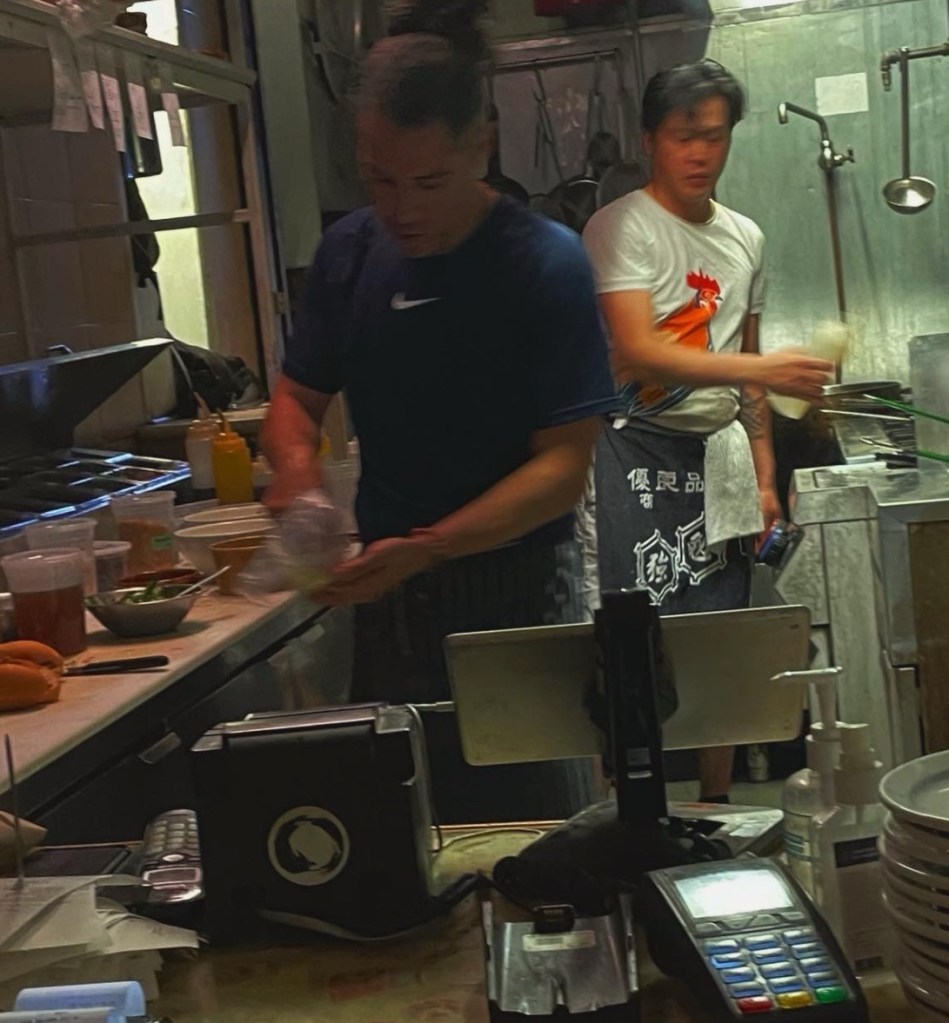
And yet, outside restaurant kitchens, that kind of immediacy feels harder and harder to access. The systems that feed us don’t reward freshness. They reward shelf life. They don’t honor memory. They standardize it. Somewhere along the way, “local” became a moral ideal rather than a lived practice, and immigrant foodways were left hovering awkwardly at the edges.
This is where my discomfort sharpened. Because if agrarianism is about reconnecting people to land, season, and nourishment, then why does it feel like so many immigrant kitchens are being asked to choose between freshness and cultural survival?
Abundance Without Access: The Royal Agricultural Winter Fair
With all of this in mind, I went to the Royal Agricultural Winter Fair expecting answers, or at least conversations. What I found instead was absence.

The fair was held at the Enercare Centre, and from the moment Nelson and I walked in, the space felt culturally narrow. The crowd was overwhelmingly white. The tone skewed old-money, heritage-forward, almost aristocratic in places, especially around the equestrian events. It felt less like a food and agriculture hub for Toronto and more like a preservation site for a very specific rural lineage.

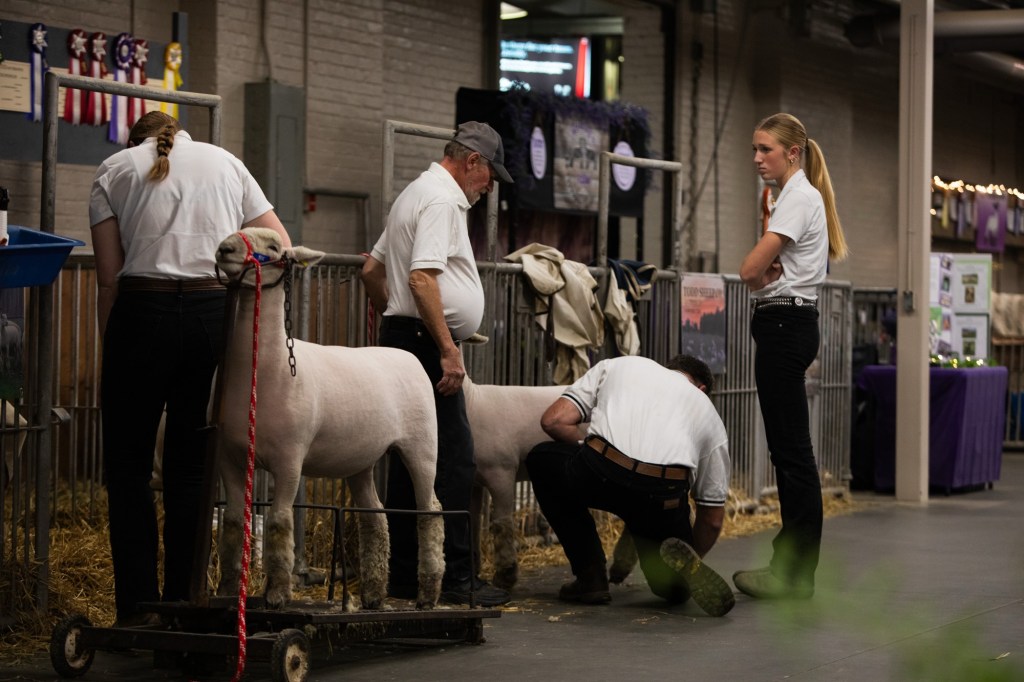
I kept looking for produce growers. For farmers working with vegetables, herbs, fruit. The kinds of foods immigrant kitchens rely on. They weren’t there. The agriculture section was dominated by livestock: cattle, goats, sheep, 4-H youth programs, breeders who already seemed deeply networked with one another. There were no booths showcasing world crops, no signage acknowledging culturally specific vegetables, no recognition of the growers who feed Toronto’s immigrant neighborhoods.
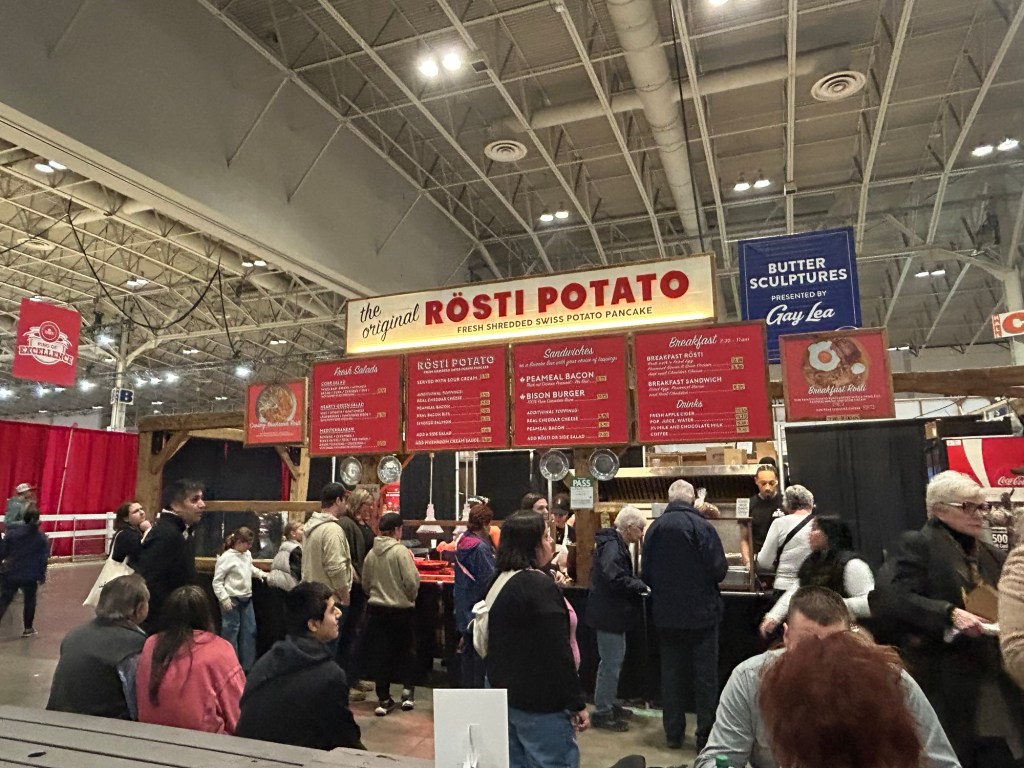
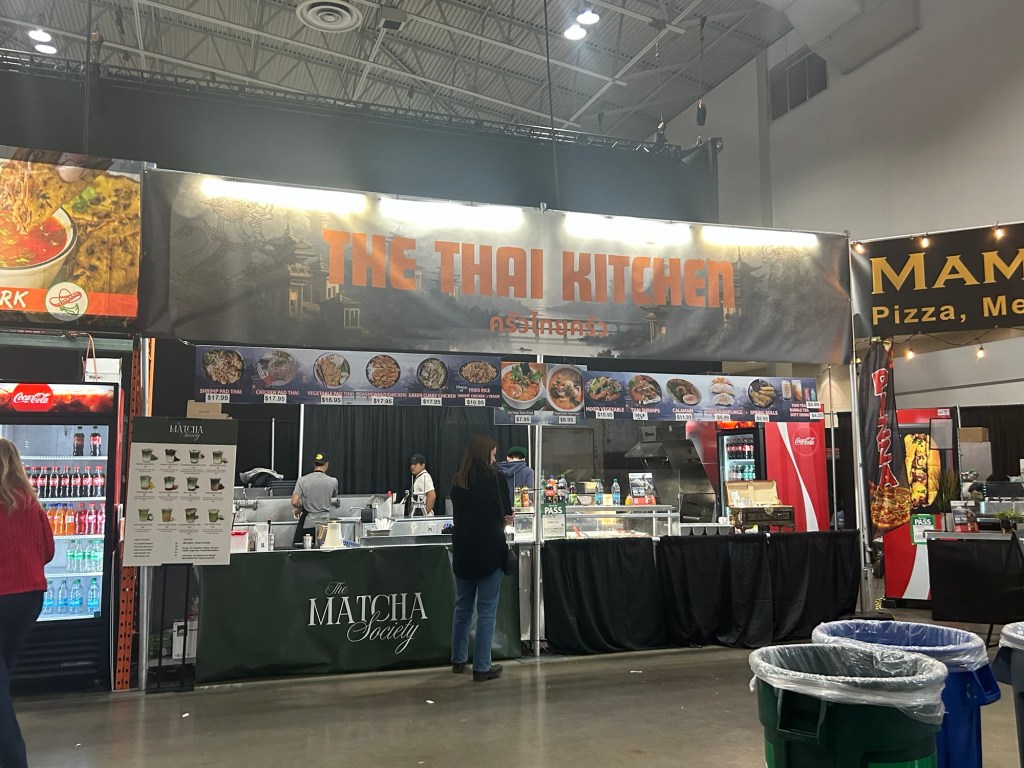
Even the food court felt disconnected from the fair’s stated purpose. Many stalls were clearly sourcing from large distributors rather than local farms. A rösti stand had a massive line, while a Thai stall sat nearly empty. A small but telling snapshot of cultural comfort hierarchies at play. This wasn’t a celebration of Ontario produce so much as a mall food court dropped into an agricultural costume.
The absence became the data.
If Ontario agriculture truly supports multicultural foodways, it wasn’t visible here. If the fair was meant to reflect how Toronto actually eats, it failed.
The Optimism of Possibility
The only agricultural conversation I managed to have that night was with Jamie Kennedy. A chef and grower whose work has long been associated with Ontario farm-to-table cooking. We spoke for about fifteen minutes. His tone was warm, nostalgic, and deeply optimistic.
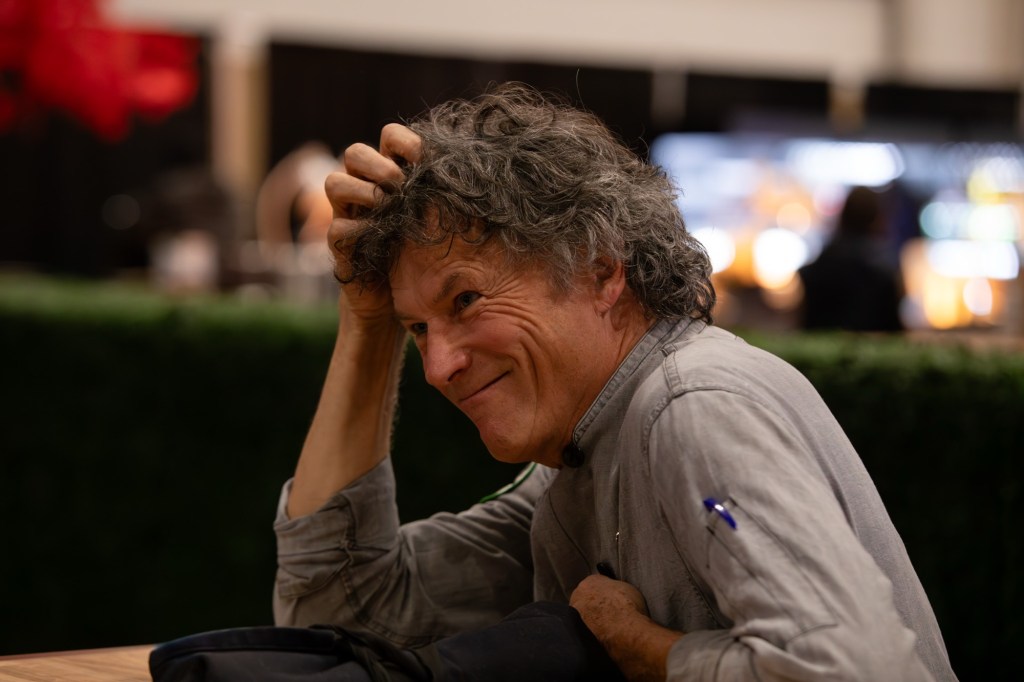
He talked about distribution as the real barrier, not demand. About how farmers and chefs need to be enterprising, entrepreneurial. To find one another and build micro-systems. He spoke passionately about Southern Ontario’s climate, pointing out that if you follow latitude lines around the world, you’ll find shared growing conditions. In his view, there’s no reason Asian greens or Caribbean crops couldn’t be grown here.
“Gone should be the days,” he said, “where a Filipino restaurant is supporting Filipino greens from the Philippines. They could be grown here.”
He wasn’t dismissive. If anything, he was hopeful. He believed cultural barriers were dissolving, that multiculturalism had created opportunity. He recalled biking to Kensington Market in his early cooking years, picking up Caribbean vegetables and Asian greens, cooking with whatever was fresh and nearby. He refused Sysco and GFS not out of moral superiority, but because he had proximity, flexibility, and time. He framed those choices as available to anyone willing to take initiative.
And that’s where the gap widened.
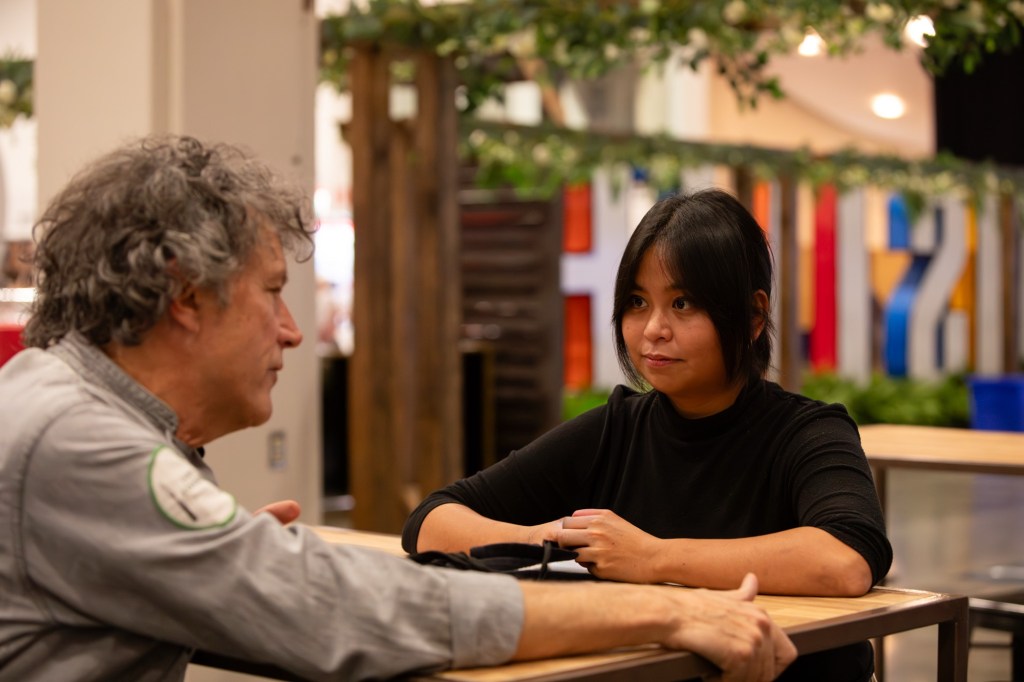
Because what he described, biking to markets, changing menus daily, building relationships crop by crop, requires a level of access that most immigrant growers and cooks don’t have. It requires land. Capital. Time. Institutional visibility. It assumes the system is open to anyone willing to work hard enough.
Standing in the middle of the Winter Fair, surrounded by abundance that somehow excluded the foods I grew up eating, his optimism felt sincere but incomplete.
Jamie represents what is possible in theory. RAWF showed me what is missing in practice. By then, my body already knew what the theory hadn’t caught up to: that access, not intention, is what determines whether food actually sustains you.
Coming Back to the Body
After the Winter Fair, I went home and stood in my kitchen longer than I needed to. The fridge was half-full. Ontario greens beside imported sauces, frozen fish next to fresh ginger. A familiar compromise. It didn’t look like Vietnam. It didn’t look like the pastoral vision celebrated at the fair either. It just looked like my life.
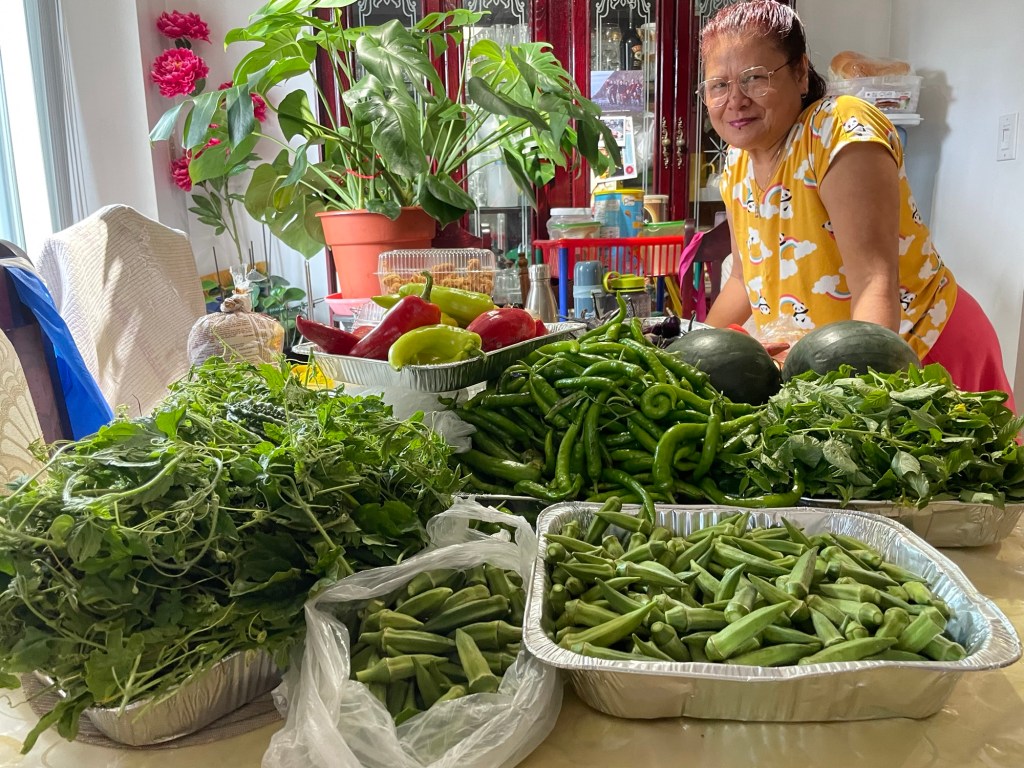
I’m still sick. Still tired. Still feeling the weight of winter settle in my body. And maybe that’s why this question keeps returning. When food is alive (fresh, balanced, handled with care), it feels like medicine. When it’s dead, over-processed, frozen for convenience, it feels like something I have to recover from.
I don’t think eating locally is wrong. I don’t think agrarianism is naïve. But I no longer believe it’s culturally neutral. In a city like Toronto, telling people to eat local without asking what they’re being asked to give up feels incomplete at best, harmful at worst.
Freshness shouldn’t require forgetting where you come from.
Sustainability shouldn’t demand that some kitchens lose memory so others can feel virtuous.
Maybe the real goal isn’t eating local. Maybe it’s eating alive. Food that still has a relationship to land, to season, to the people cooking it. Food that nourishes the body and the story it carries.
I don’t know what that looks like yet, here, in winter. But I know it has to make room for more than one kind of table.
 Marie Pascual - Between Worlds
Leave a comment